Archive

Posts Tagged ‘religion’

Do we all “Fake it”?

2010/06/07 Rich McCue 2 comments

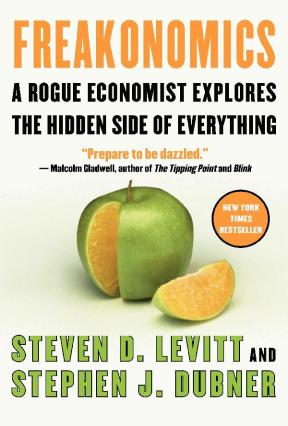
Do we all “Fake It” ?  I listended to a excellent Freakanomics podcast over lunch on “faking it” that makes a lot of sense.  No, I’m not talking about “faking it” in the bedroom (although I’m sure some faking does go on there), but “faking it” in our day to day lives.

I think we all “fake it” on a fairly regular basis.  Not only that, but we’re taught do so from an early age.  Just think of when a parent “encourages” their child to apologize to their sibling or play mate.  Do we really think that the apologizing child feels sorry for what they’ve done?  Most of the time they don’t, but they are being taught how to get along, and perform socially acceptable acts that help make up the civilized portion of our society.  Most people would agree that this sort of “faking it” is a good thing in that it reduces tension in groups, and helps them function more smoothly.

There are other kinds of faking it of course.  John Edwards (the american politician) faked it at the end of the US presidencial campaign, pretending that things were going well in his life and marriage, until it came out that the woman he was having an affair with was close to giving birth to their child. I think that is the kind of faking it that most people cringe at.

Faking it goes on in religion as well.  One example of this is in the Mormon religion I was raised in. As a teenager I was taught that if I told others that I “knew” certain religious “truths” were true, even when I didn’t actually know they were true or false, that I would come to know for myself that they were true. This could be described as the “fake it until you make it” method of learning.  While this may be a useful tool for learning to do certain tasks, I don’t believe that it is effective in determining truth.

So the next time my wife asks me how I like the new dress she bought, should I “fake it” or be completely honest no matter what the consequences?

Science and Morality?

2010/04/23 Rich McCue 2 comments

Sam Harris makes some interesting arguments for why science should be involved in evaluating moral arguments in his recent TED Talk. He argues that there is often not one “correct” position to take on an issue, but a range of position, some better, some worse than others, and that science can help us figure out which help people live more fulfilled lives.

For example, in looking at how societies portray the model of womanhood, there are probably a number of morally positive ways to do this in between the extremes of the Islamic Burka, and the overt sexuality on the covers of many western mens magazines.

Harris also addresses the issue of giving the same weight to all moral arguments, irregardless of their source.  He argues that some people are better at moral thinking that others, just like some people are better a physics than others, so why should we put the Dali Lama and Ted Bundy on the same footing when it comes to looking at moral arguments?

A thought provoking video even if you don’t agree with everything he says.

Family Friendly Home Internet Setup – Redux

A couple of years ago I wrote a blog post about how to create a family friendly internet setup in your home.  Given how quickly technology changes, I thought it was time to revisit the topic to see what has changed.

Being the father of five children under the age of 15 years old, and having 4 computers in our home along with a couple of iPod Touches, I’ve been experimenting with software & services over the past few years to try make my childrens’ experience on the internet as porn free as possible. After trying some commercial software for content filtering that ended up slowing down our 4 year old computer, and didn’t do anything to help on our iPod Touches, I have found something that works quite well on all the internet devices in our house (remember that no solution is 100% perfect not matter what the software vendor claims).  It not only works well, but once you set it up on your home router, you don’t need to install anything on the desktop computers or iPod Touches!

Read more…

Mr. Deity and the Magic

I couldn’t stop laughing as I watched this video.  Apparently Penn and Teller are magical beings, ignorance is truly bliss, and knowledge is bad.  A humorous illustration of why critical thinking is good.  Enjoy!

Reinventing the Sacred across Cultures & Religions – Stuart Kuaffman

A great interview by Stuart Kauffman where he talks about reinventing the sacred as a shared space across cultures and religious traditions so the sacred can bring us together rather than be a point of division.  

Stuart has also written a book called, Reinventing the Sacred: A New View of Science, Reason, and Religion.  

Enjoy!

What to do about Polygamy in Canada?

2009/09/23 Rich McCue 2 comments

I read in the Globe & Mail this morning that Polygamy charges were thrown out against 2 religious leaders in British Columbia. Winston Blackmore and Jim Oler were the two men charged in the case.  First let me say that I am not a proponent of polygamy, but at the same time what two consenting adults do is their own business.  If underage children are involved, then the appropriate laws should be vigorously enforced.  So what to do?

My imperfect solution: decriminalize polygamy and then institute a mandatory religious social study class in the Province of BC, similar to what Quebec and England have instituted (not religious indoctrination, but learning about the belief’s and practices of world religions).  How would this help?

  1. Decriminalization would hopefully lessen the siege mentality that the polygamist leaders encourage in their community, and allow community members to be more open to ideas from the outside.
  2. A religious social studies class would hopefully open the school children’s eyes to the world of faith and belief outside of their own community.  This might help them, as they mature, to look more critically at their own faith, and make a more informed decision as to whether or not they want to stay in a polygamist community.

My 2 cents worth…

[In the interest of full disclosure you should know that one of my great grand mothers was a polygamist in the early 1900's]

Categories: Family, Spiritual Tags:

Santa Clause & Our Modern Christmas

2008/12/23 Rich McCue 1 comment

This article was first printed in the Martlet (the UVic school newspaper) in about 1980. Unfortunately at this point in time, I do not know who the author is, which prevents me from giving appropriate attribution.

The present festivities of Santa Claus are very difficult to explain, because our Santa Clause is really a funny sort of bastard. No don’t get me wrong, I don’t mean a bastard in the present day context, but a bastard of the Middle Ages. He’s the offspring of old German practices going back two thousand years, and a Roman Catholic saint who lived after the reign of Constantine the Great, (4th Century A.D.) at a time when the Roman Empire was concentrated more in Constantinople than in Rome itself. Let us first look at his father, that is the old Germanic practices.

When I say Germanic I’m not quite correct because they really come from the Celtics, the ancient people who lived in present-day Britain, Ireland, and the Atlantic Coast form Holland to the Pyrennees. Now their practice was to celebrate the ‘sonnewende’ or yuletide, and this originated in the fear that the sun which stood still on that day (December 23rd) would disappear and never come back again. So to appease the sun god, they often brought human sacrifices. When the sun returned (and they knew very well it would because they’d seen it before after all), they would greet it by lighting candles, yule logs, etc., and by feting up trees. These customs remained in this form until the coming of the Irish Priest St. Boniface in 740 A.D.

He came to the Germanic tribes which had replaced the Celts and tried to stop the pagan rituals. He found, however, that the only way he could do it was to assimilate them into Christian practices which he achieved by having the Church year begin on December 15th, and celebrating the sonnewende at the same time. Thus instead of having lights burning for the sun-god they would now be lit for the Christ child. It should be remembered that the coming of a child, especially a boy-child was a special event anyway. (Girls were not so honoured because they represented the expense of a dowry sooner or later).

By the Middle Ages we see that more stress is laid on Christ’s mother, and this reflects the feeling of the time. (Nowadays we hear about women’s liberation, but in fact women were more venerated in the so-called Dark Ages then ever before. It is from this period that we get all our polite habits concerning the treatment of women). The idea of the Virgin Mary begins then as well.

All right, so now we have the yule log, the candles, the tree and the holly, but the focal point is still the crib or manger. The whole thing was designed as a joyful celebration with a serious moral intent…and that was the Middle Ages; they made everything holy, but also gave it a very human aspect as well. Now where does Saint Nicholas fit in?

Well, here we get another person who is connected with goodness and giving like the Christ-figure, and that is the Bishop of Myra whose name was Nicholas. Don’t bother looking for Myra because it doesn’t exist any more. It was once an important seaport on the Aegaan, just north of present-day Smirna; but various factors combined to reduce its place in history. However, it was once the see of a bishop and it was here that Nicholas performed the work which made him famous.

Nicholas brought some consolation to an age which was still far from completely civilized; he was sort of a welfare officer, he helped children, did missionary work amongst sailors, and helped girls to obtain dowries; (don’t forget that this was a time when a girl without a dowry had only two other choices; prostitution or the nunnery, and the latter were not nearly so prevalent after the 3rd century). In short then, he did charity work, and since, in this period at least, it wasn’t too hard to become a saint in the Catholic church, the Pope had him canonized while he was still alive. One reason was undoubtedly because several ‘miracles’ had become ascribed to him, including the anonymous giving of money to the needy. (this was a miracle because he wasn’t likely to have had any himself let alone enough to give away). Nicholas therefore became very well known during his lifetime; but his story might not have created any lasting impression if something hadn’t happened in the 7th century.

It was then that the Muslim Arabs overran the Eastern part of the old Roman Empire and forced the Christians to retreat westward. The result was that Nicholas’ body was removed and taken to the southern Italian seaport of Bari for safekeeping. Here a large cathedral was built in his honor, and his connection with sailors grew until he was finally made their patron saint, which result that his name was spread all over western Europe.

Coincidentally, the conversion of the Slavs occurred at this time, and his name was taken by the missionaries into Eastern Europe, including Russia, where he became the patron saint of the country. (Which explains why so many Russian czars had the name Nicholas). So you can see that Nicholas was pretty well universal by this time, and all that was needed was the veneration of the practice of secret gift-giving to complete the legend.

This occurred in the 9th century, and by the 12th century celebrating St. Nicholas Day on December the sixth was widespread all over Europe. Now actually the celebration happened on the eve of the day, December 5th, as was common for all saints festivities.

With the rise of the Spanish Empire in the 15th century, St. Nicholas became associated with Spain, mainly because that was where all the ‘goodies’ came from; by ‘goodies’ I mean spices and special sugar items which came from the East with the Moors. Thus the good bishop picked up a servant, a black moor who came to be called Black Peter and whose bag contained all the treasures of the Orient. Now we have all the elements of the legend together; a charitable bishop, no longer in Constantinople or Italy but in Spain, who appears on his day with his Moorish companion, all over Europe giving out delicious treats to the children. Don’t forget that sugar was a luxury, and oranges were so rare that in 1386 the city of Coventry made a special gift of twelve of them to Richard the Second. Well, to make it short, by 1300 the practice was well established all over Europe.

Now we get something else popping up and that is this: the Dutch became the main carriers of the St. Nicholas tradition simply because they became the main merchants of Europe, and most especially the Eastern spice trade. This one of the other customs which they transport is the custom of good eating.

So now we have the two holidays of Christmas and Saint Nicholas’ Day, one with the old symbols of sonnewende, and the other with the tradition of gift-giving incorporated. What happens to them when the Dutch take them to the New World? Well, they kept them pretty much as they were, but the trouble was that the tradition of St. Nicholas had almost died out in the non Roman Catholic countries of Europe after the Reformation , simply because Protestants did not recognize holy bishops, and when ten thousand of these Puritan settlers came over to America, it swamped the small Dutch colony in New Amsterdam. Because of neglect on the part of the Mother Country, however, these settlers were very dependent on the Dutch community for the first little while, and especially on Dutch trading ships. (Don’t forget that Holland was still in control of the luxury trade, including all those items connected with the Saint Nicholas celebration).

During this period, the Puritans were gradually taking over the Dutch colony, including their customs; but they had done exactly the same thing as their counterparts in Europe had done; that is to say, cut off all ties with bishops, and so taken all religious sense out of the December 5th festivity. On the other hand, the hard, sparse existence in the wilderness gave the custom of special, luxury item gift-giving a particular appeal to the immigrants, and they dearly wanted to take over the holiday, if only they could find a way of removing the association with the Catholic Church. They did it finally by removing the garment of a bishop from the Nicholas figure, (replacing the mitre with a sleeping cap for instance) and by shifting the date of the celebration to Christmas Day.

Now a curious thing happens’ the holiday, virtually forgotten in the Old World returns to Europe in its revised form and becomes popular again, and the Germans (who formed the bulk of the early settlers to New England) translate the name Saint Nicholas to the equivalent: Santa Claus. Thus it is in New England, after sixteen hundred years, that the marriage of the two great holidays takes place, and it is the Dutch, who had already married the holy idea with the profit motive, that promote the commercial aspect of the result.

It doesn’t take much imagination to see that if you commercialize one part of it, soon the whole thing gets out of hand, especially when, like the Puritans, you have deleted the religious connotation from the patron saint. Santa Clause, no longer a bishop, could hardly be allowed to retain his origins in Catholic Spain either, so his home became the North Pole. And as for Black Peter, well! the slave trade was in full swing by this time, so the veneration of any black man had long since disappeared, and since the Eskimos weren’t known, and the Indians despised, Santa became a pretty solitary figure, with only reindeer, (substituted for the white horse he’d had in Spain), to accompany him, Mrs. Clause and the elves were the additions of a kindlier age.

StarGate SG-1: The Parable of the Wise Scientist and the Blind Faithful

2008/12/03 Rich McCue 3 comments

Last night our family watched a StarGate SG-1 episode for our family home evening activity.  The episode we watched is called “New Ground” from season three. I saw it for the first time back in 2000, and I can still remember being uncomfortable watching it because of the cognitive dissonance it produced for me.  Just for the record, the kids loved watching it, and we had a great discussion afterwords.

The story highlights the potential for conflict between scientific discovery and dogmatic faith, and does so in an interesting and compelling fashion.  For anyone with kids or teenagers, I highly recommend watching this episode with them.

The basic plot line is this:  The StarGate team travels to a new planet, where a star gate has been recently uncovered by local archaeologists in their country of Bedrosia.  The archaeologists are very surprised to find a star gate, because they were actually searching for evidence that star gates did not exist. Bedrosia is at war with a rival country, the Optricians, over their beliefs regarding the origin of human life on their world. The Optricians believe that aliens brought humans to their world thousands of years ago through a portal, while the Bedrosians believe that their god, Nefertum, created life on their planet.

One of the archaeologists is convinced that the functioning star gate is dramatic proof that his own beliefs, and the beliefs of all Bedrosia, are wrong, and that the Optricians have been right all along. The Bedrosian military is not convinced by the evidence and believe that the StarGate and SG Team are all part of an elaborate hoax setup by the Optricians to undermine Bedrosian institutions and their faith (i.e. their religion). From the Bedrosian General (I’m paraphrasing): “I will not allow this hoax to undermine the institutions and faith of our people.  I have read the book of Nefertum from cover to cover and know that it is true no matter what lies the Optricians try to make us believe.  Our solders have not died in vain.”

“The primary theme of the episode is the ideological war between religion and science. The archaeologist is a true scientist, who has no unfounded allegiance to abstract belief, but is eager to change what he believes when presented with new evidence. The Bedrosians are dedicated to their faith, and are presented as arrogant and stubborn — unwilling to consider that their beliefs might be wrong, even when presented with hard evidence. This dichotomy is manifested in the characters of the archaeologist and the military general.” – http://www.gateworld.net/sg1/s3/319.shtml

You can read a full summary of the episode here: http://www.gateworld.net/sg1/s3/319.shtml. If you’d like to watch the episode, you can purchase it at the iTunes store here.

Two thumbs up from Rich & Heather!

My Polygamist Heritage

2008/06/24 Rich McCue 5 comments

Why am I writing about my polygamist heritage? Two things really. The recent raid on the FLDS polygamist group in Texas has brought polygamy back into the news and into general public discussion. Secondly, as the Texas polygamy news story broke, I had just finished reading, “In Sacred Loneliness: The Plural Wives of Joseph Smith” by Todd Compton.

First let me say that I believe that what the Texas authorities did in taking all the children in the community away from their parents was wrong. If there was a complaint about abuse by an individual, then something should have been done to protect that person’s family until things could be sorted out. This is not the first time the US government has put polygamist families through their legal justice system. I am a happy monogamist, and will encourage my children to be monogamists, but in this day and age, if consenting, informed adults want to enter into polygamist relationships, then the government should not interfere. If teenagers are being encourage or coerced to enter into polygamist marriages, then the adults involved should be prosecuted to the fullest extent under applicable laws (as Warren Jeffs the leader of the FLDS was for example).

My great grandmother Katherine Love Paxman was the fourth wife of William Paxman. At the time she married, Katherine was 24 years old and her husband was almost 50 years old (interestingly, William’s eldest son by his first wife, was 29 at the time he married Katherine). William was a leader in the Mormon church, and in accordance with church doctrine at the time, was encouraged to marry more than one wife. Unfortunately at the time he married my great grand mother, the United States government was beginning to actively prosecute and jail polygamist husbands.

At least partly as a result of the pressure by the US legal system, the church sent William on a mission to New Zealand in order to move him out of the reach of the US government. Only one wife could go with him on his mission, and my grandmother turned out to be the lucky wife, and made the trip to New Zealand with him (I’m not sure why, but it may have been an economic issue, as great grandma didn’t have any children to take with her at the time, unlike her sister wives).

Nine years, and five children later (1897), William died suddenly while eating dinner, just two days after falling off one of his other wife’s roof while fixing it. At the time Katherine was living at her mother’s home, and after his death, to make ends meet, she took a job as secretary at the town hall in Nephi, Utah.

In a sense I am grateful for polygamy. I wouldn’t be here today if it were not for my Great Grandfather William Paxman, and his fourth wife, Great Grandma Katherine Paxman. I wouldn’t wish it on anyone else, but quite selfishly I’m glad to be here.

P.S. In Sacred Loneliness is lengthy book that provides quite detailed biographical sketches of the lives of Joseph Smiths 30+ wives, right from their births and family back grounds, to their death’s. Todd Compton is an academic, and his prose isn’t captivating for the most part, but some of the stories of the women in his book are truly incredible. Many of the stories taken directly from their personal histories. A great example of one of those incredible stories is of Zina Huntington Jacobs. Joseph Smith approached her about a polygamist marriage in Nauvoo, and she rebuffed him, and within weeks married Zina, who had been courting her at the time. Six months after her marriage to Henry Jacobs, Joseph approached her again and told her that an angel had appeared to him with a drawn sword and told him that if he did not marry her, that he would be killed and that her family would not go to Heaven. She acquiesced, and was married to Joseph as his fifth wife. The marriage was done in secret. So secret in fact that Joseph’s first wife Emma was not told of the marriage.

Strong Opinions Weakly Held

2008/06/06 Rich McCue 2 comments

I was just listening to a Podcast called StackOverflow – a fairly geeky podcast. At one point they were talking about how people reviewing new technologies have to make judgements as to whether a programming language or technology is good or not based on limited time using the technology.

They suggested that in those cases where it is impractical or impossible to come to a definite conclusion, one should state your option clearly and strongly, but be open to change in the future. Have Strong Opinions but Weakly Held. While a person may be confidant that they are right based on the evidence they currently have, they should be open to change their opinion if new information comes to light, or if a some mistake can be shown in their thinking.

With regards to religion, things are far more complex. From my current perspective, I believe that the LDS is not what it claims to be. That opinion is based on my my personal experience in the church and from the research I’ve done. I hold this opinion strongly, but if I had an experience like Paul did on the road to Damascus, or if a lot of new historial evidence came to light, I could see myself modifying my position. I personally think the chance that I will have an experience like Paul is reported to have had are pretty low given my life experience, but you never know.

On the other hand, everyone has to find their own spiritual path. My path is mine, and not any one else’s. People may choose to stay in a religous tradition for perfectly valid reasons, even though they may not agree with all it’s teachings, or believe in all it’s foundational stories. Everyone has to find a balance that works for them and their family. I guess that is one of the reasons that life so exciting and interesting.

This is one of my Strong Opinions, Weakly Held.

Categories: Spiritual Tags: ,